



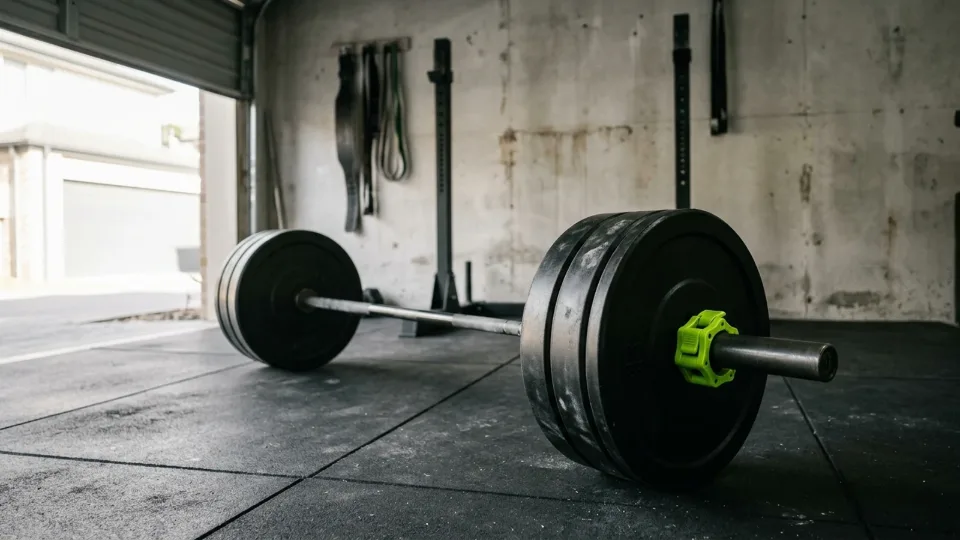
Start with a tape measure, not a shopping basket. An Olympic bar is 2.2 m long, a bumper plate is 45 cm across, and you are taller than you think with a bar locked out overhead. Those three numbers decide most of what follows.
The floor plan
Six square metres usually means a strip about 3 m wide and 2 m deep, often beside a parked car or a workbench. Here is how that space gets used:
| Zone | Size | Why |
|---|---|---|
| Bar width | 2.2 m | Standard bar, sleeve to sleeve |
| Loading room | 30 to 40 cm each end | To slide plates on without hitting a wall |
| Lifting depth | 1.5 m | Stands, bar path and a step back from the hooks |
| Storage strip | about 50 cm | Plates, collars, a bench on its end |
A 3 m wall is the minimum. At 3.2 m you stop scraping knuckles on the plasterboard when you load a 20 kg (44 lb) plate. If the garage is narrower, face the bar along the long side of the room instead and give up a bit of storage.
The bar
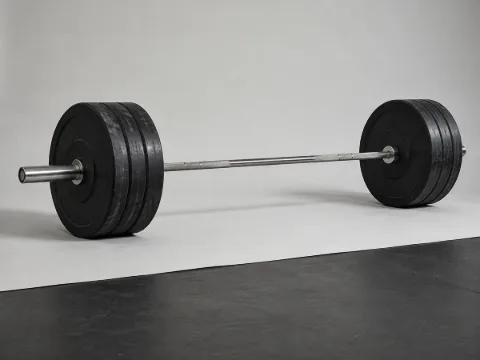
Buy one good bar first; anything else long can wait. The Olympic Power Bar 20 kg (44 lb) at $329 is rated to 680 kg (1,500 lb), which is more than any home lifter will load, and its knurling suits squats, presses and deadlifts. A trap bar or curl bar can wait until you know you will use it.
Stands or a half rack
Both work in 6 m². The difference is stability, storage and what happens when a rep goes wrong.
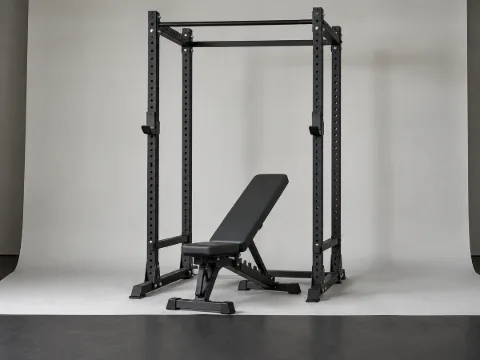
- Squat stands take the least floor and can be pushed against a wall when the car comes back in. The Squat Stand Pair is $499 and weighs 60 kg (132 lb) together. They are freestanding, so re-rack with control, and set up a way to bail on squats and bench: safety straps or spotter arms at the right height, or a clear plan to dump the bar behind you.
- A half rack is heavier and more planted. Ours, the Half Rack with Pull-up Bar ($899 on sale, usually $999), weighs 110 kg (243 lb) and adds a pull-up bar and plate horns, so your plates live on the rack instead of the floor. It stays where it is, so the space becomes a gym full time.
If the car shares the garage, buy stands. If the gym owns the space, the half rack pays for itself in storage alone.
A first plate order
Bumpers make sense in a garage because they are all the same diameter, so a deadlift from the floor always starts at the right height, and they are kinder to concrete. A sensible first order of Bumper Plate pairs:
- 2 x 20 kg (44 lb) at $115 each
- 2 x 10 kg at $71 each
- 2 x 5 kg at $49 each
That is 70 kg (154 lb) of plates, 90 kg (198 lb) with the bar, for $470. Add a pair of 15 kg (33 lb) plates when your deadlift passes 100 kg (220 lb). Small change plates are worth adding once presses stall, as a 10 kg jump (one 5 kg plate each side) is a lot on an overhead press.
Flooring
Garage slabs are hard, cold and often slightly sloped toward the door. Cover at least the lifting area, about 2.4 m by 1.5 m, with rubber. Interlocking Floor Tiles (6-pack) at $89 lay without glue and lift out when you move house. Work out the number of packs from the tile size on the product page and add one pack for cuts around posts and door frames. Put the tiles down before the stands, so the stands sit level on the same surface as your feet.
Ceiling height
Measure this with the bar, not a guess. Stand on the flooring, hold a broomstick overhead with locked arms, and mark the top of your hands. Add about 25 cm for the radius of a bumper plate above the bar. For a lifter of 1.80 m that typically lands around 2.45 to 2.55 m. Garage doors steal height: the track and the motor housing sit lower than the ceiling, so measure under them too, or press facing a different way.
Pull-ups need even more. Hang from the bar height you plan to use and check there is 30 cm above your head at the top of a rep.
Worked example: one tight garage
A 3.1 m by 2 m strip next to a hatchback, 2.4 m ceiling, door track at 2.2 m. Stands rather than a rack, because the car comes back in every evening. Overhead presses happen with the lifter facing the back wall, clear of the track, standing under the 2.4 m section. The shopping list: power bar $329, stands $499, the plate order above $470, lockjaw collars $34 and two packs of tiles $178. That is $1,510 for a gym that squats, presses, deadlifts and rows, and packs back to a 50 cm strip in about five minutes.
The bench can come later. Floor presses cover a lot of pressing work in the first few months, and you will know by then whether a flat bench or an adjustable one suits the space.
Comments
0Leave your comment